Day walk
Sealy Tarns
Fit walkers
Plan this levelHelp me decide
Two taps to the mountain
Say where you start and what matters most, and a matching day tour appears with its from-price.
The one for you
from $161
It spends 3 hours on the Hooker Valley Track, the walk to the foot of the peak.
The one for you
from $99
It gives the Hooker Valley Track 4 hours and adds the Tasman Glacier viewpoint walk.
The one for you
from $176
Lunch is included, and you choose the Hooker Valley or the Tasman Glacier walk.
The one for you
from $152
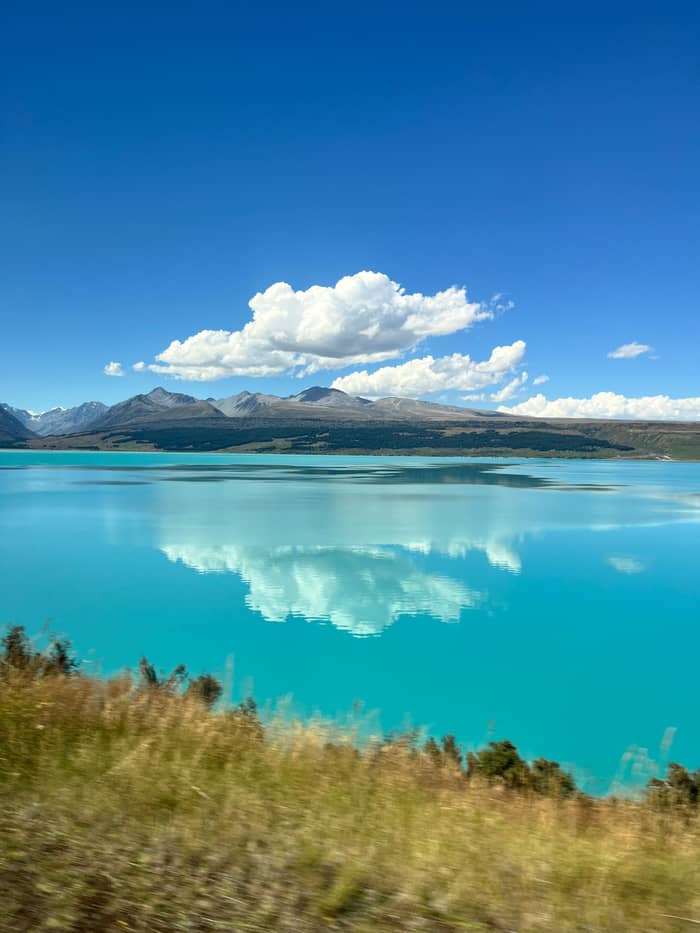
It stops at Lake Tekapo for 30 minutes and Lake Pukaki for 15 before the park.
Can you climb Mount Cook? Experienced mountaineers do, on a long, exposed route from a hut high on the glacier. Here is the route, the time, the risk, the Ngāi Tahu view and the walks for everyone else.
Editorial team, mountcookdaytour.com · Updated November 8, 2026 · A 8 min read
The essentials
The short answer to whether you can climb Mount Cook is yes, if you are already a capable mountaineer, and no, if you are a visitor hoping to try it on holiday. DOC ranks the national park with the great mountaineering areas of the world, for novices and seasoned climbers alike.6 The summit itself is another matter. It is a serious alpine route on a high-consequence mountain, and there is no walking path to the top.
There is also a question of respect. DOC explains that Ngāi Tahu believe it is not appropriate to climb onto what is, in effect, the head of an ancestor.5 Alpine Guides, guiding in the park since 1966, says it respects that wish and stops its clients a few steps below the absolute summit.7,8 The small gap between the guide's stopping point and the top is deliberate, and it is a choice worth honouring.
For everyone else, the mountain is something to approach, not to stand on. The Hooker Valley Track leads to the foot of Aoraki, a walk DOC rates with the country's best.9 Between those two extremes lie the steep steps to Sealy Tarns and the alpine route to Mueller Hut, a serviced 28-bunk hut, each a step further into the world climbers live in.10 The rest of this page explains the climb for the curious and the ambitious alike.
The hazards
| Hazard | What the source says | Source |
|---|---|---|
| Avalanches | Possible in any season21 | DOC |
| Terrain | Mostly complex avalanche terrain19 | DOC |
| Ice and rockfall | Route exposed in many places18 | Alpine Guides |
| Crevasses | Heavy from December25 | Alpine Guides |
| Weather | Changes rapidly20 | Alpine Guides |
| Collapse | High Peak fell in 199126 | Alpine Guides |
| Margin | Very little room for error27 | Mountain Safety Council |
Each line restates its source; none of them is a full list of the risks.28,19
Is Mount Cook hard to climb? By height alone it looks modest beside the giants of the world. Alpine Guides puts it bluntly: to a visiting mountaineer it is a peak of low altitude that carries the consequences of a high one.16 The mountain rises from close to sea level, carries heavy ice and sits in the weather of the Roaring 40s, and the company says that mix makes it a match for far higher summits.17 Height is not the measure here; exposure and objective danger are.
The usual guided line up the Linda Glacier is technically the easiest route on the mountain, yet Alpine Guides warns it carries a relatively high level of objective hazard. The route is exposed in many places to avalanches, rockfall and ice-fall from above.18 DOC classes the bulk of the park as complex avalanche terrain that demands respect from anyone entering it.19 A strong climber cannot outrun a falling serac; the plan is to spend as little time under it as possible.
Weather adds the last layer. Alpine Guides notes that mountain weather can change rapidly, with high winds, heavy snow, freezing temperatures and storms.20 DOC says avalanches can occur here in any season.21 Is Mount Cook harder than Everest? The honest comparison is that the problems differ. Aoraki lacks the thin air of the Himalaya but packs glacier travel, ice and rockfall into a single, very long day.
The climb begins high on the glacier, not in the village. Alpine Guides gives the main guided line as the Linda Glacier from Plateau Hut.2 DOC lists Plateau Hut as an alpine serviced hut with 33 bunks.37 Reaching it on foot is a strenuous effort of 1.5 days, and Alpine Guides notes that flying in and out makes the best use of the short spells of good weather.38 Weather, not fitness, often decides how a team reaches the hut.
Even the hut is a calculated risk. DOC had GNS Science assess it, and the study puts the risk of death from avalanches for someone spending 14 hours a day at the hut at between 1 in 66,000 and 1 in 100,000 per day.39 DOC notes that the hut is mainly used by climbers and others who seek high-risk, remote experiences.40 All the alpine huts in the park get a daily radio check-in and weather update.41
From the hut the route crosses the Hochstetter Icefall into the lower Linda Glacier.11 Higher up, the Gun Barrels must be crossed to reach the Shelf, an area threatened by falling ice.12 The top 50 to 100 metres of the Shelf are climbed in roped pitches on steep ice, up to where the Summit Rocks begin.42 Three or 4 belayed pitches then lead through the rocks to the summit ice cap.13 Much of it is climbed by headlamp, before the sun softens the snow.
Ways to go higher
Day walk
Fit walkers
Plan this level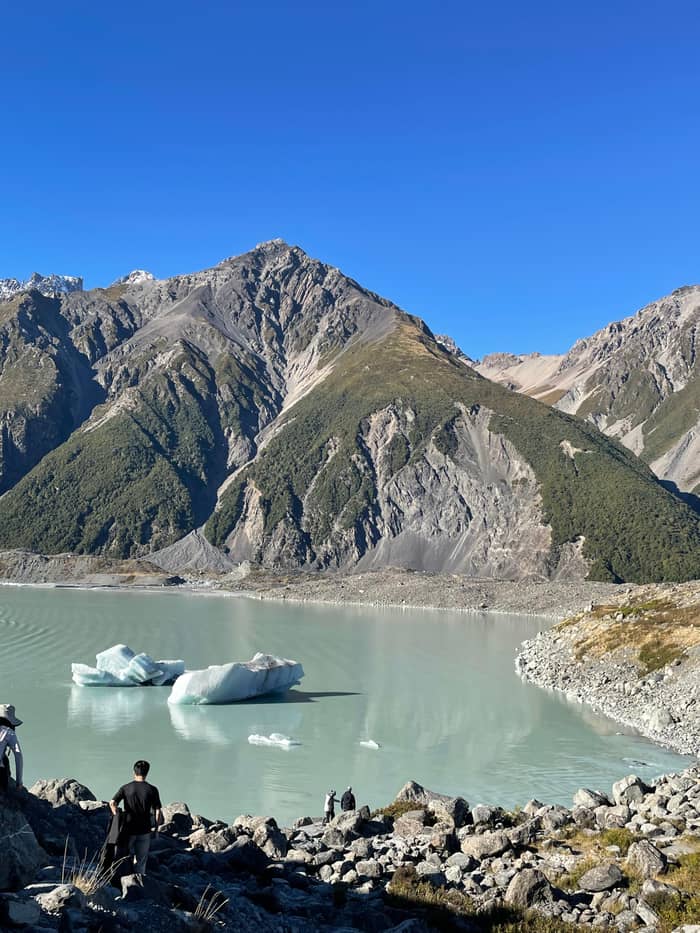
Overnight
Alpine experience
Plan this level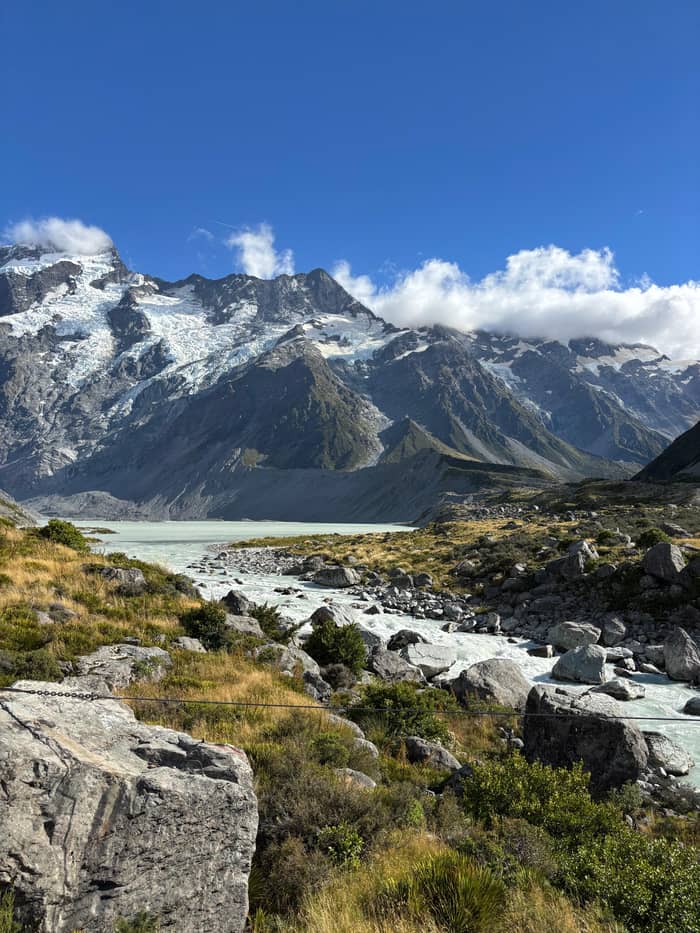
Expedition
Returning guests only
Plan this levelHow long does it take to climb Mt Cook? From Plateau Hut, Alpine Guides gives 15-18 hours return, with a height gain of 1,700 metres.3 The summit comes after 8-10 hours of climbing.14 The descent follows the same route and usually takes 7-10 hours.15 Alpine Guides adds, with some understatement, that 24-hour climbing days are not unknown.48 There is no shortcut and no easy way down. The day ends only when the team is back at the hut.
The whole expedition takes far longer than the summit day. Alpine Guides sells the ascent as a 6-day expedition for experienced returning guests, with a professional guide on a 1:1 basis.32,49 The spare days exist for weather. A climb only goes when the forecast, the snow and the glacier all line up, and a team may wait at the hut for its chance. Some expeditions end without a summit attempt at all.
The season is short and getting shorter. Alpine Guides gives the climbing season as late October to late December.4 From December the route can become heavily crevassed and finally impassable.25 The company says climate change has reduced the length of the season for Aoraki over the past 3 decades.50 Ascents are strictly limited each season, which makes the window both narrow and in demand.51
See the mountain up close
Tell us your group size and each from-price appears.
3 options compared
Tell us your group size and each from-price appears.
≈
View≈
View≈
ViewFigures are GetYourGuide from-prices, translated at the ECB reference rate. The booking step shows what you pay exactly.
The summit day
Departure
The guided line starts at the hut.2
First stage
Into the lower Linda Glacier.11
Middle
A traverse under falling-ice danger.12
High
Three or 4 belayed pitches to the ice cap.13
Top
Reached after 8-10 hours of climbing.14
Return
Usually 7-10 hours more.15
Guided ascents are not sold to newcomers. Alpine Guides offers them only to returning guests who have shown the required skills and mountain sense on its prerequisite peaks.1 The company has guided year-round in the park since 1966 and also provides the region's avalanche forecasting service.52 Expect to show your climbing record before any date is offered. The questions are about safety, not about gatekeeping.
The prerequisites are specific. Alpine Guides wants to see at least 14 days of crampon use in the 2 years before the climb.34 Its fitness test is gaining 1,000 vertical metres in 3.5 hours while carrying a pack of 8 kg.53 It recommends building skills over at least 2 or 3 climbing seasons, rather than squeezing them into one.54 Those are the numbers that separate a summit attempt from a dream.
Independent climbers face the same mountain without a guide's judgement. At the visitor centre DOC keeps an intentions register for anyone heading into the backcountry.44 Its staff hand out details on huts, fees, the forecast and, in winter, avalanches.55 The New Zealand Avalanche Advisory publishes daily assessments by elevation and aspect.43 None of it replaces experience, but all of it is part of the routine.
Video
Nick Kowalski on YouTube · Playback files load only once you tap play.
These mountaineering fatalities are a reminder of the high-consequence environment of our alpine mountains, especially our highest peak
Above the tracks
Official statements give no single Mount Cook death rate; they report individual tragedies instead. The New Zealand Mountain Safety Council reported that two climbers, an IFMGA-qualified guide and their client, died after a fall near the summit on 24 November 2025.56 In December 2024 the mountain took three climbers, two of them guides from the US and Canada, and their bodies were never recovered.57
Why is Mount Cook so dangerous? The council's chief executive said that mountaineering has very little margin for error, and that even the most qualified professionals cannot eliminate all risk.27 Alpine Guides lists what can go wrong: slips, falls, rockfall and icefall can cause serious or fatal injury.28 The mountain itself moves. In the collapse of December 14, 1991, the High Peak lost about 10 vertical metres of rock and ice to the East Face.26
The wider range is restless too. DOC notes a significant rock avalanche from Mt Haast in 2013, followed by several other large landslides in the central Southern Alps.58 The council called the recent deaths a reminder of the high-consequence environment of the alpine mountains, and especially the highest peak.36 Those words are the best summary of the risk: real, persistent and never fully under anyone's control.
Climbers have tested themselves here for generations. The Reverend Green, an Irishman, made the first try in 1882 with two Swiss guides and got within 20 metres of the summit.59,60 It fell in 1894 to Fyfe, Graham and Clarke, a New Zealand trio.60 The park's oldest hut, Hooker Hut, first opened in 1910 on the moraine by the Hooker Glacier.61,62 The Hillary Alpine Centre tells the story in the village.35
A visitor can still step into that world. Sealy Tarns climbs 600 m on about 2,200 steps above the Hooker Valley.29,30 Beyond it, the route to Mueller Hut needs mountaineering experience and can hold snow and ice from March to November.31 An adult bed there costs NZD 50 a night from May to September, and DOC asks walkers to visit the visitor centre on the day for fees and conditions.46,45 It is a big step up from a day walk.
For a day visitor the best answer is the valley. The Hooker Valley Track ends at Hooker Lake right under the peak.33 The Christchurch day tour with lunch on this page offers a choice of the Hooker Valley or the Tasman Glacier walk, and starts from $176. Stand at the lake, find the route line on the ice above, and you will understand both why people climb it and why it is best left to those who train for it.
FAQ
Guided ascents are only for returning guests who have shown the required skills.1
Alpine Guides gives 15-18 hours with 1,700 metres of height gain.3
Alpine Guides stops a few steps below it, respecting Ngāi Tahu's wishes.8
Its end point, Hooker Lake, sits under Aoraki/Mount Cook.33
Sources
Further reading
Planning a day out to Aoraki? A real person replies here.